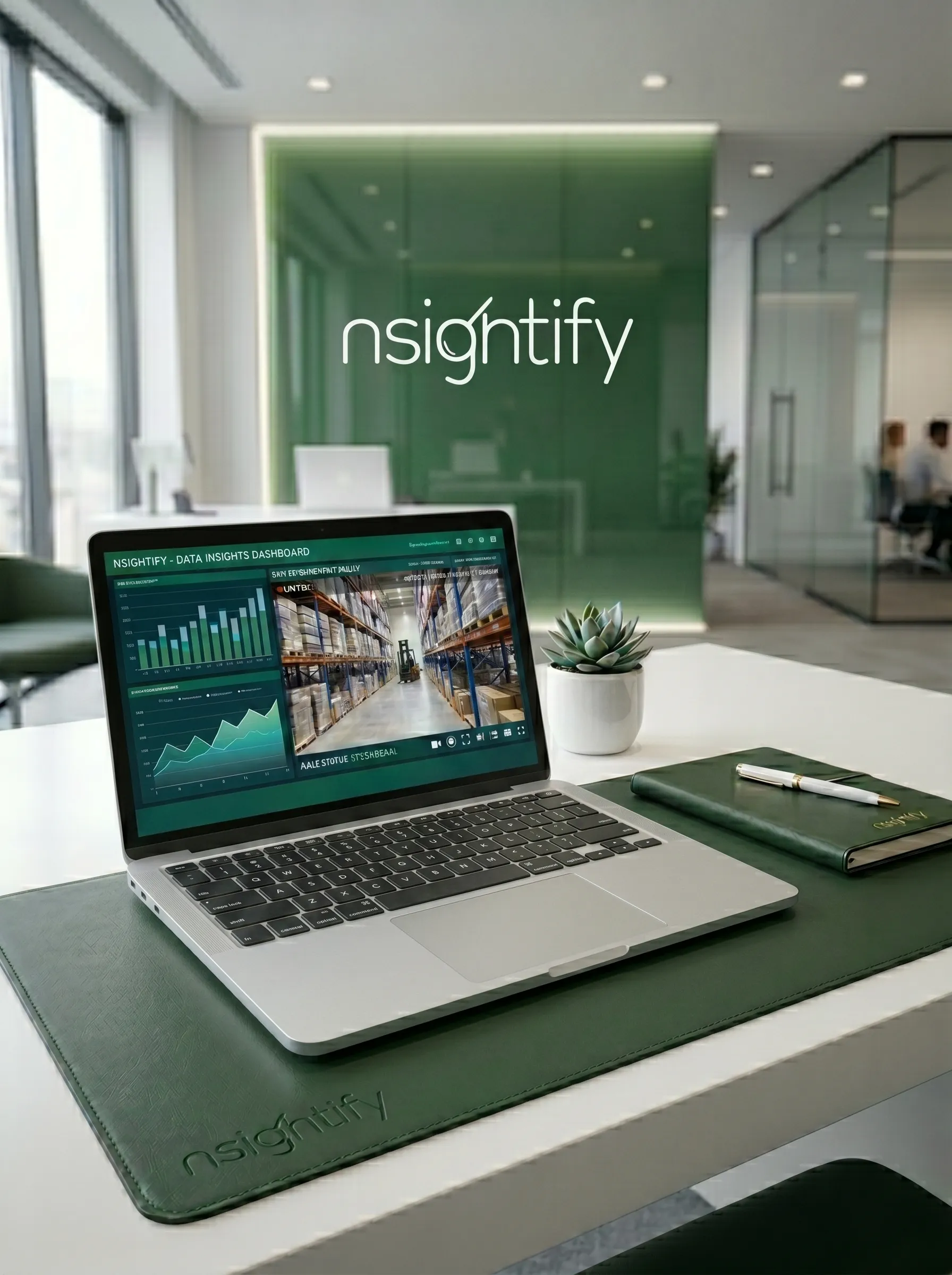
AI Video Analytics: Turn Existing Cameras Into Intelligence
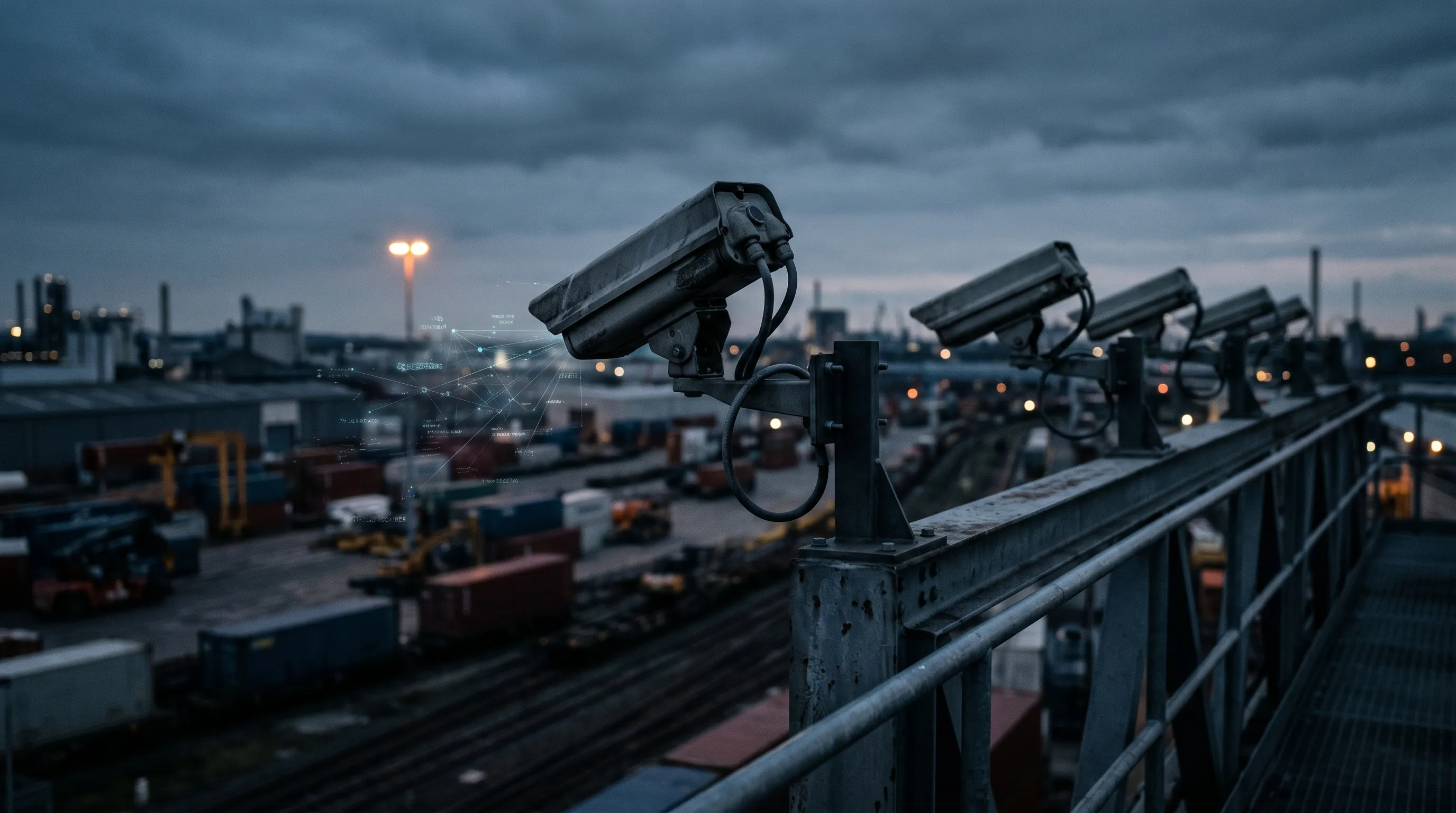
Your Cameras See Everything. Right Now, They Tell You Nothing.
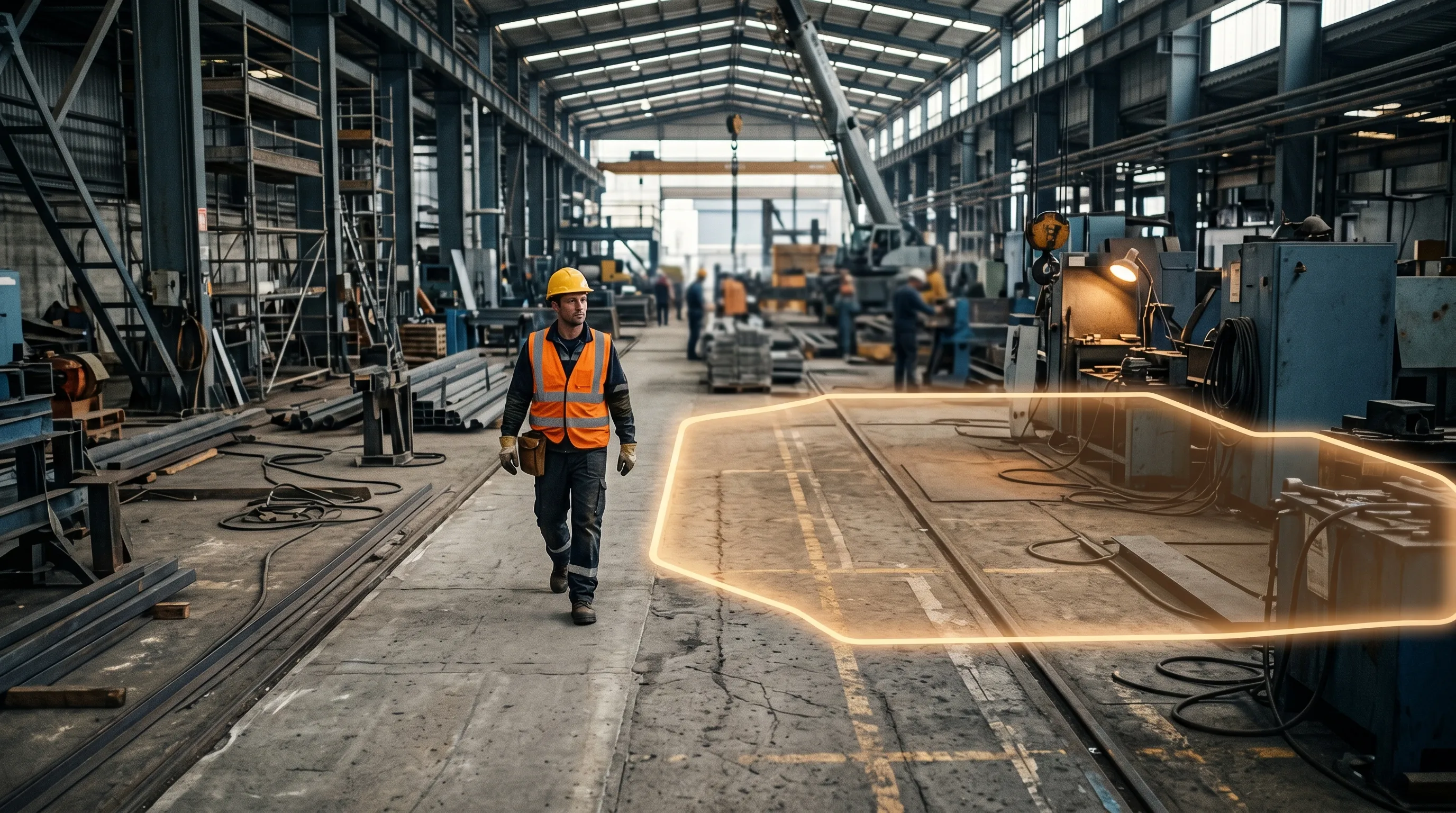
Walk onto any construction site, warehouse, or manufacturing floor and you’ll find cameras. Dozens of them. Sometimes hundreds. They run all day, record everything, and fill storage drives nobody ever opens.
Then something goes wrong. A near-miss at the loading dock. Someone slips past the gate. A worker steps into a hazard zone without a hard hat. And what happens next? Someone pulls the footage — after the fact — to confirm what already happened.
That’s the problem in one sentence. Your cameras are recording history. They aren’t telling you anything while it still matters.
There’s a better use for that infrastructure, and it doesn’t require ripping any of it out.
Footage Is Evidence. Intelligence Is Something Else Entirely.
Recorded video is a record. You review it after an incident to understand what went wrong, settle a dispute, or hand something to an insurer. It’s useful — but it’s always backward-looking. By the time you’re watching the clip, the moment to act has passed.
Intelligence is different. Intelligence is the system watching the feed in real time and telling you the instant something needs your attention — while you can still do something about it.
The technology that makes this possible is computer vision: software that reads each frame of a video stream, recognizes people, objects, zones, and behaviors, and flags what matters. It’s the same broad capability behind a self-driving car reading the road, pointed instead at the cameras you already have running.
What “AI Video Analytics” Actually Means Now
For a long time, “watching the cameras” meant a person in a back room staring at a wall of monitors, hoping to catch something in the half-second it crossed one of forty screens. It doesn’t scale. Attention drifts. Most feeds are never watched live at all.
Modern AI video analytics replaces that with software that watches every feed, continuously, and never blinks. It can recognize when:
- A person enters a restricted or hazardous area
- Someone on the floor isn’t wearing required protective equipment
- A forklift comes dangerously close to a pedestrian
- A vehicle or individual crosses a perimeter they shouldn’t
- An emergency exit or egress path is blocked
- An area is more crowded than it should safely be
When it sees one of these, it doesn’t file the clip away for later. It sends an alert — in real time — to the people who need it.
That’s the shift: from a system you consult after an incident to a system that helps you prevent one.
So Why Don’t More Businesses Have This Already?
Because most of them assume it means starting over.
The old model of AI video analytics came bundled with proprietary cameras, dedicated hardware boxes, new vendors to manage, and a multi-month IT project to glue it all together. For an operations or security leader who’s already stretched thin, that’s an easy “not this quarter.” So the cameras keep recording into the void, and the intelligence sitting inside those feeds goes unused.
That model is outdated. You don’t need new cameras to get intelligence out of the ones you own.
How Nsightify Turns Your Existing Cameras Into Intelligence
Nsightify is a SaaS-first AI video analytics platform. It reads the feeds from the cameras you already have and turns them into real-time operational intelligence — physical safety and perimeter security today, with more on the way.
Getting connected is straightforward. Your existing IP cameras connect directly to the Nsightify platform. Where a direct connection isn’t practical, a lightweight Nsightify edge bridge streams those same feeds up to the platform for you. Either way, the analysis runs in Nsightify — there’s nothing heavy to install on-site and no proprietary camera to buy.
From there, the platform does the watching:
- Physical safety — PPE compliance, hazard-zone enforcement, forklift–pedestrian proximity alerts, and blocked-exit detection, monitored continuously instead of during a twice-a-day walkthrough.
- Perimeter security — unauthorized entry, loitering, fence-climbing, and abandoned-object detection, with alerts the moment something needs attention rather than a clip you find the next morning.
Integrations are designed to be effortless, so the platform fits into how your team already works instead of forcing a new workflow around it.
For most businesses, that’s the whole picture: a subscription, your existing cameras, real-time alerts. For enterprises and regulated industries with stricter requirements, Nsightify also offers a Zero Trust deployment — keeping data inside your own private network or environment when compliance and data sovereignty demand it.
Value on Day One — Not After a Six-Month Rollout
The reason this matters is speed. There’s no long training period, no data science team to hire, and no months-long implementation before you see anything useful. You connect the cameras you already own, and the platform starts surfacing intelligence from the feeds that were already running.
The cameras were always watching. Now they can finally tell you something — while you can still act on it.
Ready to see what your existing cameras have been missing? Book a demo and we’ll show you real-time AI video analytics running on infrastructure you already own.
Keep reading:

See Nsightify in Action
We're onboarding a limited number of pilot partners. If you're an operations or security leader in construction, warehousing, or manufacturing — let's talk.