OSHA's Warehouse National Emphasis Program Now Runs to 2031
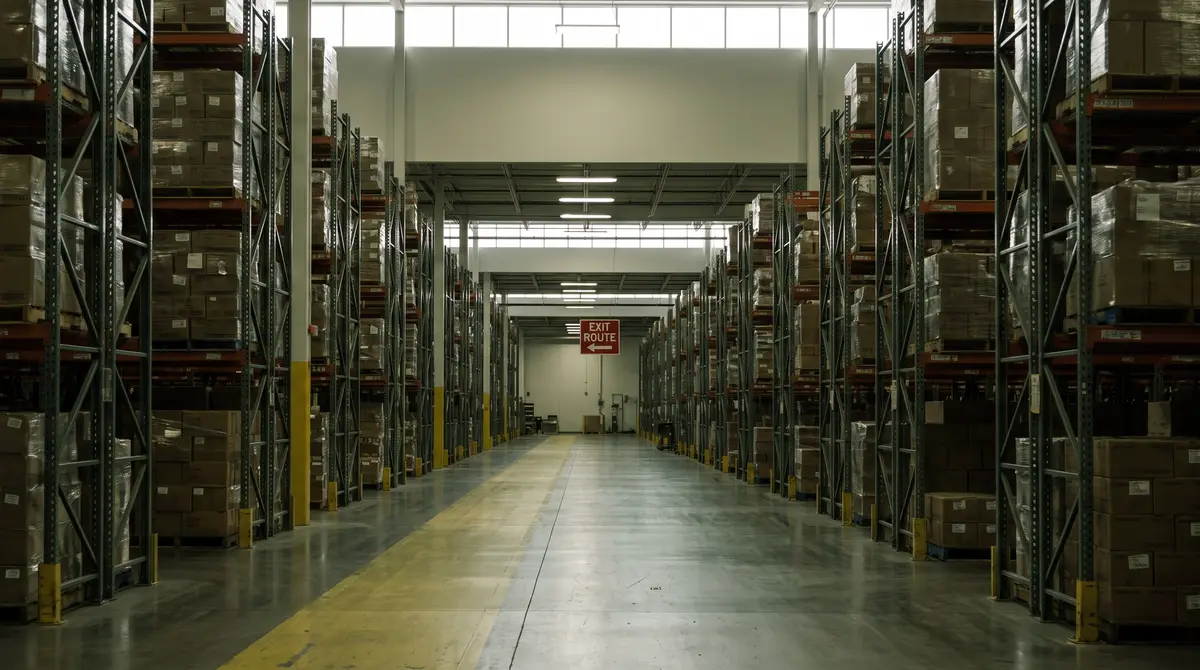
OSHA’s warehouse national emphasis program lapsed on 13 July 2026 and was replaced eighteen days later by a directive that runs five years instead of three. The replacement is narrower than the program it supersedes, and narrower in ways that change who gets inspected and what an inspector arrives looking for. If your facility was on the old targeting list, it is not automatically on the new one.
What the 2026 OSHA warehouse national emphasis program replaced
A national emphasis program is a temporary OSHA directive that concentrates inspection resources on a specific hazard or industry for a fixed period. It creates no new legal duties. What it sets is which establishments get selected for programmed inspection, and which hazards a compliance officer is instructed to examine once inside.
The 2023 instruction terminated on schedule, three years after its effective date. Its replacement, CPL-03-00-026, was signed on 6 July 2026, took effect on 31 July 2026, and expires five years from that date — 31 July 2031. It explicitly supersedes the July 2023 version.
Worth knowing if you go looking: OSHA’s directives index still lists the 2023 directive under its original date, and still links to the old PDF. The superseding document sits at a near-identical filename. Anyone checking the index rather than the document will conclude the program simply expired.
Narrower is not the same as lighter
The natural reading of a shorter scope is reduced pressure. That reading misses what actually got cut and what got extended.
The new directive runs five years rather than three, and OSHA states its case for continuing with its own enforcement record: within the first eighteen months of the 2023 program, the agency reports more than 1,700 violations identified and roughly 37,410 workers removed from hazards. It also cites 2020–2024 five-year average injury rates showing couriers and express delivery carrying an average recordable case rate of 8.6 against 2.6 for all private industry.
The scope narrowed. The clock got longer, and the reasoning got more specific.
What changed, precisely
The directive lists its own significant changes. Five of them matter operationally.
| Change | What it means on the ground |
|---|---|
| High-injury-rate retail removed | Home centres, hardware stores, supermarkets and warehouse clubs are out of the program’s scope |
| Mandatory heat and ergonomic screening removed | No longer a required step in every inspection under this program |
| Term extended to five years | Runs to 31 July 2031, with a program review inside four years |
| Old targeting lists void | Area offices need not finish unfinished cycles from the 2023 program |
| OIS code changed to “WAREHOUSE” | Prior program inspections stay coded “WAREHOUSE23” |
Retail is out
The 2023 program carried a second table of high-injury-rate retail establishments — home centres, hardware stores, other building material dealers, supermarkets, and warehouse clubs and supercenters — subject to partial inspections of storage and loading areas. That table is gone. The new program covers seven NAICS codes: postal processing and distribution centres, couriers and express delivery, local messengers and local delivery, and four warehousing and storage categories.
- 491110 Postal Service (P&DCs only)
- 492110 Couriers and Express Delivery Services
- 492210 Local Messengers and Local Delivery
- 493110 General Warehousing and Storage
- 493120 Refrigerated Warehousing and Storage
- 493130 Farm Product Warehousing and Storage
- 493190 Other Warehousing and Storage
- 444110 Home Centers
- 444130 Hardware Stores
- 444190 Other Building Material Dealers
- 445110 Supermarkets and Other Grocery (except Convenience) Stores
- 452311 Warehouse Clubs and Supercenters
If you run a retail operation that was inside the old scope, this program no longer reaches you. Subparts D, E, L and N still do.
Heat and ergonomic screening is no longer mandatory
Under the 2023 directive, heat and ergonomic hazards had to be considered and documented during every inspection, with a health inspection opened where present. The new directive removes that mandatory screening.
Heat has not disappeared from the document. It still appears among the hazards inspections focus on, and area offices may expand an inspection to address it. What changed is that the screening step is no longer compulsory on every visit. Heat also remains governed by its own separate directive, which OSHA reissued in April 2026 on its own schedule.
State plans: read this one carefully
The 2023 directive required state plans to participate. The 2026 version is harder to characterise, because the document says two things.
Its abstract and the heading of its federal program change section both state that notice of intent and adoption are required. The body of that same section says state plans are “strongly encouraged, but are not required” to adopt the updated instruction, while also setting the 60-day notice and six-month adoption timetable.
That is what the instrument says. It is not a settled question, and if your obligations turn on it, it is a question for counsel and for your state plan — not one to resolve from the federal text alone.
Your old list does not carry over
Area offices are not required to complete unfinished cycles from the 2023 program. A new master list gets generated from the seven covered NAICS codes, randomised, and worked through.
One deletion rule is worth knowing: establishments that had a comprehensive inspection covering these hazards within the previous three years come off the list. If OSHA inspected you comprehensively in 2024 or 2025, that may keep you off this cycle. It does not affect complaints, referrals, or fatality and catastrophe responses, which reach any covered establishment regardless.
Where Nsightify fits
The hazard focus did not narrow. Powered industrial vehicle operations, material handling and storage, walking-working surfaces, means of egress and fire protection all carry forward. Two of those — egress and vehicle operations — are conditions that either exist or don’t at a given moment on a floor, which makes them observable continuously rather than at audit time.
Nsightify’s Physical Safety capabilities run on the IP and CCTV cameras already installed, with no camera replacement: blocked-exit detection, forklift-pedestrian proximity and restricted-zone intrusion, with real-time alerting when a condition appears.
The constraints are worth stating. Camera-based detection depends on sightlines, lighting, and where a camera was mounted — usually for a purpose other than analytics. Occlusion in a racked aisle is real. And detection is not prevention: an alert says a condition exists now, which matters because the alternative is reading about it in a 301 report later.
Questions operators are asking
Is the OSHA warehouse national emphasis program still in effect in 2026?
Yes. The 2023 directive terminated on 13 July 2026, and a superseding instruction took effect on 31 July 2026. The new program expires five years from that date, on 31 July 2031. OSHA’s directives index had not yet been updated to reflect the change, so the index alone will give you the wrong answer.
Does the new program still cover retail establishments?
No. The 2023 version included a separate table of high-injury-rate retail establishments — home centres, hardware stores, building material dealers, supermarkets, and warehouse clubs — for partial inspections of storage and loading areas. The 2026 version removes that coverage entirely and applies to seven warehousing, postal and courier NAICS codes.
Does my state plan have to adopt the updated program?
The directive is internally inconsistent on this. Its abstract and section heading state that adoption is required; the body of the same section says state plans are strongly encouraged but not required, while still setting notice and adoption deadlines. Treat the answer as unsettled, check your own state plan’s published response, and take legal advice if your obligations depend on it.
Is my facility still on OSHA’s warehouse targeting list?
Not necessarily. Area offices are not required to finish unfinished cycles from the 2023 program, and a fresh master list is generated under the new one. Establishments that received a comprehensive inspection covering these hazards in the previous three years are removed from the list. Complaints, referrals and fatality responses are unaffected.
What records can an inspector still ask for?
OSHA 300 logs, 300A summaries and 301 incident reports for the current and previous three calendar years, reviewed at the opening conference to identify recorded injuries tied to the covered hazards. That requirement carried over unchanged, and Part 1904 recordkeeping duties run independently of any emphasis program.
What to check this quarter
Confirm your NAICS code against the new table of seven — if you were covered through the retail table, your position changed on 31 July. Check whether a comprehensive inspection in the last three years takes you off the current cycle. Walk your egress routes and loading aisles the way a compliance officer would. Then ask the harder question: whether the only time anyone checks those conditions is when a person happens to be walking past.
If that walk leaves you with a question about watching egress routes and loading aisles between inspections, bring it to the Nsightify team.
Keep reading:
More on this from Nsightify: PPE detection and hazard-zone monitoring.


See Nsightify in Action
We're onboarding a limited number of pilot partners. If you're an operations or security leader in construction, warehousing, or manufacturing — let's talk.