Do Employee Monitoring Laws by State Cover Cameras?
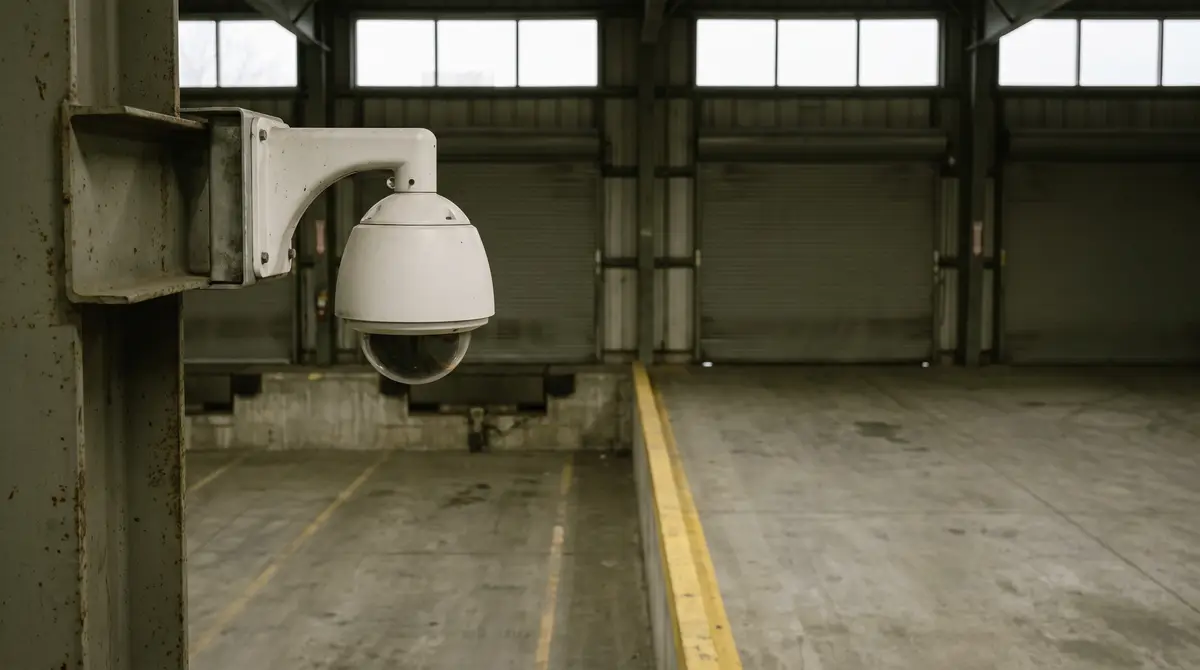
From 1 October, a Connecticut employer running cameras on its own floor must tell employees where it monitors, not just what kind of monitoring it does, unless a security and safety exception applies. In Maine, a newer law leaves a camera used for security or safety out of scope entirely. Employee monitoring laws by state disagree about cameras, and the thing they disagree on is what the camera is for.
Employee monitoring laws by state were written for inboxes
Search for employee monitoring laws by state and the first page is a set of fifty-state tables. They list Connecticut, New York and Delaware as notice states, add Maine for 2026, and treat every entry as the same kind of rule. Several are published by companies that sell keystroke and screen tracking software, and the tables are built for that product.
A camera is a different question. Whether a state’s notice law reaches a camera at all is decided in the statute’s definitions, and the definitions do not agree. Some name cameras and then carve out a purpose. One names photo-optical systems only as a way of intercepting email and phone calls. One excludes security and safety cameras from its definition altogether.
An employee monitoring notice law requires an employer to tell employees what electronic monitoring it conducts, before or when the monitoring begins. The state laws differ on what counts as monitoring, what the notice must say and which purposes are exempt, and those differences decide whether a workplace camera is covered at all.
For a company running cameras in more than one state, that makes the camera’s purpose the fact everything else depends on. It is also the fact least often written down.
Status, current as of 24 September 2026: Connecticut’s rewrite takes effect on 1 October, with no delay or amendment announced. Nothing below is legal advice, and each statute is linked so you can read it yourself.
Three shortcuts that trip up multi-state camera programs
Three habits get multi-state camera programs into trouble, and each one is a reasonable shortcut.
The fifty-state table. It answers “is there a notice law?” and stops. It does not say whether the law reaches cameras, and it rarely separates a camera on a loading dock from software on a laptop. One 2026 guide that ranks for these searches lists Maine’s law as effective in March. The Maine Department of Labor puts the date at 29 July. Copy the table into a compliance calendar and the calendar inherits the error.
One sign at the front door. Plenty of sites post a single notice at the entrance saying the premises are monitored, and treat it as covering everything. From 1 October that stops matching Connecticut’s text, which wants the specific locations named and the notice posted at the location as well.
Treating every camera the same. A lobby camera, a dock camera and a camera on a production line can sit on the same recorder and fall under different rules in the same state. The difference is not the hardware. It is what each camera is for and where it points, and a program that has never written that down has nothing to test against a statute.
Reading each statute by what the camera is for
The useful exercise is to take the four statutes that come up most often and ask the same three questions of each. Does it reach a camera? What must the notice say? And is there a purpose-based exception?
| State | What the text says about cameras | What the notice must cover | Purpose-based exception |
|---|---|---|---|
| Connecticut, from 1 Oct 2026 | Names cameras; excludes collection for security purposes in common areas open to the public | Types of monitoring and specific locations; posted, including at the location | Location disclosure waived for security and employee safety purposes |
| Maine, since 29 Jul 2026 | Excludes cameras used for security or safety | Notice before surveillance, at the hiring interview and once a year | Security and safety cameras sit outside the definition |
| New York | Names photo-optical systems only as a means of monitoring phone, email or internet use | Written notice on hiring, acknowledged and posted | A camera watching a work area is not a listed subject |
| Delaware | Telephone, email and internet only; video not mentioned | Daily electronic notice, or a one-time acknowledged notice | Video is not mentioned |
California sits outside this pattern. For businesses the CCPA covers, the notice duty for workplace cameras runs through the CCPA’s notice at collection rather than a monitoring statute, and where California’s workplace surveillance laws say cameras cannot go covers the state in more detail.
Connecticut from 1 October: types, locations, and a sign where it happens
Connecticut has required notice of electronic monitoring since 1998, and its definition has always named cameras and photo-optical systems. Public Act 26-73, approved on 4 June 2026, rewrites the statute from 1 October. Three duties are added, plus a new exception.
- Location, not just type. Prior written notice must now name the types of monitoring and the specific locations on the premises where it may occur.
- A notice at the location. The posted notice must go in a conspicuous place, including in the specific location where monitoring may occur. The posting still counts as the written notice.
- A statement for new hires. Employees hired on or after 1 October must receive, before they start, a plain-language statement of the activities that are prohibited and may be monitored without notice.
The penalties are unchanged: up to $500 for a first offense, $1,000 for a second and $3,000 for each one after, levied by the Labor Commissioner after a hearing. The long-standing exception also survives. An employer with reasonable grounds to believe employees are breaking the law, violating the legal rights of the employer or its employees, or creating a hostile workplace may monitor without notice where monitoring may produce evidence of it.
The two Connecticut exceptions that decide most camera questions
The first exception is in the definition. Collection of information for security purposes in common areas of the premises held out for use by the public is not electronic monitoring at all. The exclusion’s words reach a security camera in a lobby held out for public use. They do not reach a camera over a dock the public does not use.
The second is new. The requirement to disclose the specific location does not apply at an airport, or when the employer has reasonable grounds to monitor “for security and employee safety purposes.” Two details in that sentence matter.
It waives the location, not the notice. The duty to disclose the types of monitoring still applies, so a safety camera exempt from the location rule still belongs in the notice.
And it says and. The waiver reads as covering monitoring for security and employee safety, not security or safety. Whether a camera used only for safety, with no security purpose, qualifies is a question for counsel. So is whether the waiver also removes the duty to post at the location, since that duty is also a location requirement. The statute does not answer either on its face.
Maine: a notice law that leaves safety cameras out
Maine’s employer surveillance law, Public Law 2025, chapter 524, became law without the Governor’s signature on 11 January 2026. The Maine Department of Labor gives its effective date as 29 July 2026.
It covers monitoring through photo-optical systems, and then excludes an employer’s use of “surveillance cameras for security or safety purposes.” Where the law does apply, the employer must notify employees before surveillance begins, tell candidates during the hiring interview and give written notice once a year. It also restricts audiovisual monitoring in an employee’s home, personal vehicle or property unless the job requires it. Fines run from $100 to $500 per violation.
Set Maine beside Connecticut and the conjunction changes. Maine says security or safety. Connecticut’s waiver says security and employee safety. Maine’s exclusion names safety on its own, so its words reach a camera installed only to watch for blocked exits. Connecticut’s text is less clear, which is why the purpose you write down matters more there, not less.
New York and Delaware: phone, email and internet, not cameras
New York Civil Rights Law section 52-c is often listed alongside Connecticut and Delaware as a monitoring notice law. Its notice duty attaches when an employer monitors or intercepts telephone conversations, email, or internet access and usage. It names photo-optical systems, but only as one of the means by which that monitoring might be done. A camera watching a work area is not monitoring any of the three. The notice must be given on hiring, acknowledged in writing or electronically, and posted, with penalties of up to $500, $1,000 and $3,000.
Delaware’s statute, title 19, section 705, is narrower still. It covers telephone, email and internet usage, offers a choice between a daily electronic notice and a one-time acknowledged notice, and does not mention video.
The hardware is the same in every state. The notice duty follows what the camera is for.
When a safety camera starts answering other questions
Every purpose-based line above depends on the purpose staying put. It often does not. A camera installed to watch for blocked exits gets asked, months later, who was on the dock at 3 a.m. Footage pulled for a safety review ends up in a disciplinary file. A count of people at a door, useful for crowd limits, becomes a throughput number on a manager’s report.
None of the four statutes above prohibits these uses, and none of them says a change of use removes an exception. But Maine and Connecticut both draw their line by purpose, and a camera whose actual use has drifted away from its written purpose is harder to defend on that line. If camera alerts start feeding decisions about individual workers, the question also moves into the human-review step California’s SB 947 would require (on the Governor’s desk as of 24 September 2026). That is a different body of law, answering a different question.
Writing the purpose statement once for every site
The document that holds a multi-state program together is short. For each group of cameras with the same job, write down:
- Where the cameras are, by area, not just by site.
- What they are for: security, employee safety, both, or something else, in plain words.
- Whether the area is open to the public, which in Connecticut can take a security camera out of scope.
- What analytics run on them, if any, and what each one reports.
- Who receives alerts and footage, and whether either is used for discipline or performance.
- When the statement is reviewed: at least annually, and whenever a camera’s use changes.
The same page then answers each state’s question in its own terms. Connecticut asks for types and locations. Maine asks whether the camera is for security or safety. New York and Delaware ask whether phone, email or internet use is monitored. If a camera group also runs features that measure faces, that is a separate notice duty altogether, covered in where biometric collection starts under BIPA.
What camera analytics changes about the notice question
Nsightify adds real-time analytics to a site’s existing IP and CCTV cameras. It does not add a camera, so the notice question attaches to the existing estate. What analytics can change is what a camera is used for, which is why the purpose statement should name every detection running on each group. Nsightify can also exclude a camera from analysis, or mask a zone within a view so it is never analyzed, so that what runs on each group matches the purpose written down. That limits analysis, not recording: masking changes neither what the camera captures nor what the recorder keeps.
Most of Nsightify’s detections describe a security or safety condition in a scene: PPE compliance, a blocked exit or obstructed egress path, forklift–pedestrian proximity, a person down, intrusion into a restricted zone, after-hours zone entry. People and vehicle counting is the one to think about carefully. A count at a dock door is a security measure in one purpose statement and a productivity measure in another, and the statutes above care which one it is.
The limits are plain. Nsightify is an alerting layer. It does not write notices, post signs or decide which statute applies, and running it resolves no notice obligation. Detection also depends on camera placement, lighting and sightlines. Whether a given deployment falls inside Connecticut’s waiver or Maine’s exclusion is a question for the employer and counsel, and this article does not answer it.
Frequently asked questions
Do employers have to notify employees of security cameras?
It depends on the state and on what the camera is for. Connecticut’s text names cameras but excludes collection for security purposes in common areas open to the public. Maine’s excludes cameras used for security or safety. New York’s and Delaware’s notice laws are written around telephone, email and internet monitoring. In California, for businesses the CCPA covers, the duty comes through its notice at collection. Confirm your own position with counsel.
Does Connecticut’s electronic monitoring law apply to cameras?
Its definition names them. Connecticut defines electronic monitoring to include cameras and photo-optical systems, and has since 1998. It excludes collection for security purposes in common areas held out for public use. From 1 October 2026 the notice must name the types of monitoring and the specific locations where it may occur, though the location disclosure does not apply where the employer has reasonable grounds to monitor for security and employee safety purposes.
What changes in Connecticut on October 1, 2026?
Public Act 26-73 rewrites Connecticut’s monitoring statute. Employers must give prior written notice of the types of monitoring and the specific locations where it may occur, and post the notice including at the location itself. Employees hired on or after 1 October must receive, before they start, a written plain-language statement of which activities are prohibited and may be monitored without notice. Penalties remain up to $500, $1,000 and $3,000 for first, second and later offenses.
Does Maine’s employer surveillance law cover security cameras?
Its definition excludes them when they are used for security or safety. Maine’s law, in effect since 29 July 2026, defines employer surveillance to include photo-optical systems and then excludes an employer’s use of surveillance cameras for security or safety purposes. Other surveillance requires notice before it begins, disclosure during the hiring interview and written notice once a year, with fines of $100 to $500 per violation.
Does New York’s electronic monitoring law cover video cameras?
Its notice duty is written around telephone, email and internet monitoring. New York Civil Rights Law section 52-c requires notice when an employer monitors or intercepts telephone conversations, email or internet access and usage. It names photo-optical systems only as one means of doing that. The notice must be given on hiring, acknowledged by the employee and posted, with penalties of up to $500, $1,000 and $3,000.
What to do before 1 October
If you have a site in Connecticut, walk it with the camera list in hand and mark each camera by where it is and what it is for. The statute’s text excludes collection for security purposes in common areas held out for public use. It waives the location disclosure where the employer has reasonable grounds to monitor for security and employee safety. For the rest, it asks for the location in the notice and a posting where the monitoring happens. Take the marked-up list to counsel. Then write the one-page purpose statement for every site, so the next state that passes a camera notice law is a question you can already answer. If a camera on that list leaves you unsure what it records or reports, send that question to the Nsightify team.
More on this from Nsightify: PPE detection and hazard-zone monitoring.



See Nsightify in Action
We're onboarding a limited number of pilot partners. If you're an operations or security leader in construction, warehousing, or manufacturing — let's talk.