California Emotion AI Law: The Definition Is Wider Than the Ban
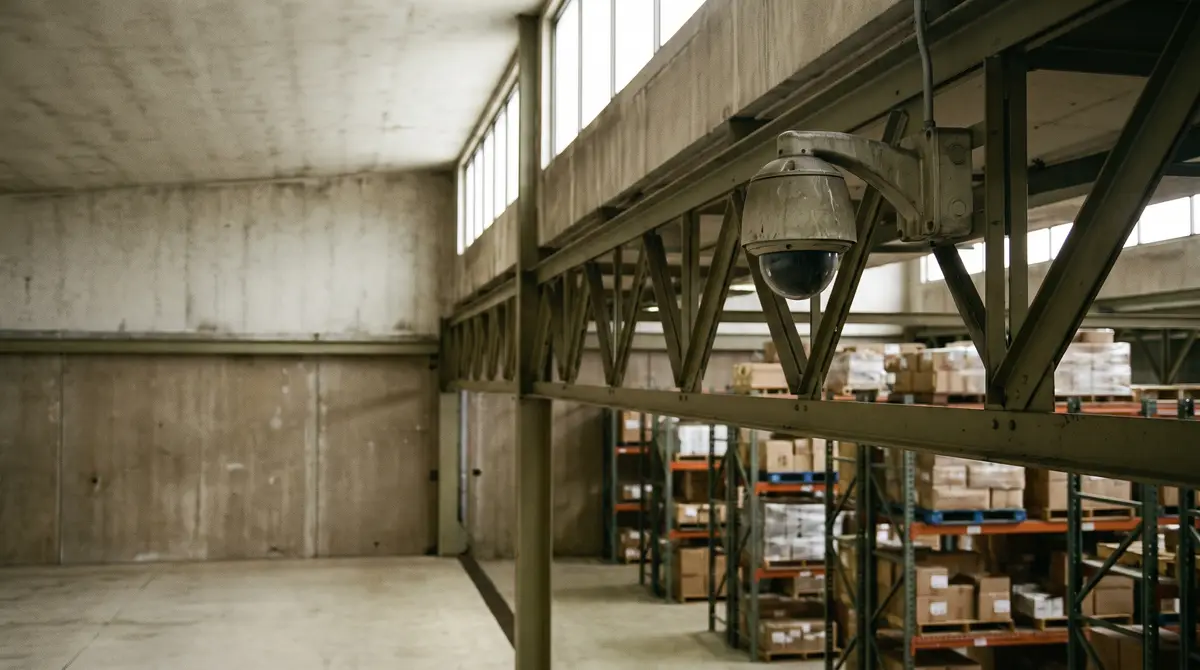
A camera that flags a missing hard hat and a system that scores whether a worker looks frustrated are, under California’s emotion AI workplace law, the same category of thing. The definition reaches both. The prohibition reaches only one of them, and the gap between those two sentences is where every operations manager in the state now has to do some reading.
The California emotion AI workplace law starts with a definition
AB 1883, signed on 30 September 2026 as Chapter 853, Statutes of 2026, adds a new part to the Labor Code — Part 5.8, commencing with section 1580 — governing workplace surveillance tools. Assemblymember Bryan is the author. The new part runs to four sections, 1580 to 1583, in the enrolled text the Governor signed: definitions, a prohibition, enforcement, and a narrow exemption.
Most coverage of the law leads with the prohibition, which is the newsworthy part. The operational problem starts one section earlier, in the definitions.
A workplace surveillance tool, as section 1580 defines it, is any system, application, instrument or device that collects or facilitates the collection of employee data, activities, communications, actions, biometrics or behaviors — gathered, in the statute’s words, “by means other than direct observation by a person.”
That last clause is the whole reach of the definition.
The definition describes how information is gathered, not what it is gathered for.
Read it against your own site. A camera running PPE detection collects data about employee actions by means other than a person watching. So does a badge reader, a time-tracking application, a telematics unit in a yard truck. The definition is not a description of invasive technology. It is a description of automation.
Status, current as of 1 October 2026: AB 1883 was enrolled on 3 September, presented to the Governor on 10 September, and approved and chaptered on 30 September 2026 as Chapter 853, Statutes of 2026. It takes effect on 1 January 2027. The bill’s status page is the record. Nothing below is legal advice.
Three readings of AB 1883, and where each one fails
Three readings of this law are circulating, and each one fails in a different way.
The headline reading. “California bans emotion AI at work” is accurate and tells an employer nothing actionable. It does not say what an emotion AI system is, whether the reader owns one, or what happens to the equipment that is already installed.
The client-alert reading. Employment firms have covered the bill competently, and they are writing for general counsel — enumerating what passed, what it prohibits, what the penalty is. That is the right document for a lawyer and the wrong one for a site manager, because it stops at the prohibition and never tests the definition against real equipment.
The assumption reading, which is the dangerous one. It goes: we run safety cameras, safety is obviously fine, nothing here concerns us. The conclusion may well be right. The reasoning is not, because it skips the two sections that decide the question, and an employer who cannot say which section protects them cannot answer an inspector, an auditor or their own safety committee.
The law is short. Reading it in order takes ten minutes and produces a defensible position instead of an assumed one.
How to read AB 1883’s three moving parts in order
AB 1883 has a definition, a prohibition and an exception, and they do different jobs. Taken in sequence they answer the question; taken out of sequence they produce the assumption reading above.
| Section | What it establishes | What it means on your floor |
|---|---|---|
| 1580 | Defines a workplace surveillance tool by collection method, not by purpose | Most automated systems that observe employees are inside the definition, including safety cameras |
| 1581(a) | Prohibits two uses of such a tool where it uses artificial intelligence: recognizing, inferring or predicting an individual’s emotional state, and collecting neural data | The question is what your system infers, not what it is called |
| 1581(b) | States the section does not prohibit using such a tool to ensure safety, or where it does not do the two things in 1581(a) | Two separate routes out of the prohibition, and they are not the same route |
The prohibition targets two uses, not cameras
Section 1581(a) does not regulate a device class. It regulates two uses: one inference and one kind of collection. The first is recognizing, or making inferences or predictions about, an individual’s emotional state. The second is collecting neural data, which section 1580 defines as information generated by measuring the activity of an employee’s central or peripheral nervous system that is not inferred from nonneural information.
That framing matters more than it first appears. A detection that reports a physical fact in a scene — a person is in a restricted zone, required head protection is absent, a forklift and a pedestrian are converging — is making a claim about the world. A system that reports that a worker seems stressed is making a claim about a person’s interior state. The statute draws its line there, and it is a line a buyer can actually test a product against.
The exception has two limbs, and they are different
Section 1581(b) does two things in one sentence. It says the section does not prohibit an employer from using a workplace surveillance tool to ensure safety. It also says the section does not prohibit using one that does not meet the specifications in subdivision (a).
Those are not the same argument. The first is a purpose-based carve-out and its boundaries are not defined in the text — the statute does not say what ensuring safety covers, who decides, or what happens to a system used for safety on Monday and productivity on Tuesday. The second is simpler and stronger: a tool that never infers emotional state and never collects neural data is outside subdivision (a) on its own terms, with no reliance on purpose at all.
For most safety deployments the second limb is the one worth understanding, because it turns on a verifiable property of the product rather than on a characterization of intent.
The term the statute uses but does not define
Section 1580 is a definition section. It defines artificial intelligence, employ, employee, employer, neural data, public prosecutor and workplace surveillance tool.
It does not define emotional state.
That is an observation about the drafting, not a prediction about what follows from it. It is worth noting because the prohibition’s scope depends on a term the law leaves to ordinary meaning, and because capabilities such as fatigue scoring, gait analysis or behavioral risk prediction would sit at unclear distances from it. An employer’s exposure under this section is a function of what their systems infer, so the sensible response is to find out precisely what each one claims to infer.
Five questions to put to a vendor before 1 January 2027
Ask for written answers. A vendor who cannot answer these in writing has told you something.
- Does the system infer, score or predict any emotional, psychological or affective state of a person? Not “do you market it that way” — does any model in the pipeline output such a value.
- Does it collect neural data as section 1580 defines it, from any sensor, in any configuration.
- What exactly does each detection assert? A physical event in a scene, or a characterization of a person.
- Are any inference features switched off by default but available? A capability you have not enabled is still a capability you have bought.
- What is the stated purpose of each detection in our deployment, and is that purpose recorded anywhere you could show a third party.
What Nsightify’s detections report, and what they don’t
Nsightify’s detections report physical events in a scene. Whether required PPE is present, whether a person has entered a restricted machine area, whether a forklift and a pedestrian are converging, whether a person is down, whether an exit is blocked. Each one is a statement about what is happening in the camera’s field of view.
None of them infers an employee’s emotional state, and none measures nervous-system activity. The two capabilities section 1581(a) prohibits are not capabilities Nsightify offers — which is a statement about what the product does, not a legal conclusion about any particular deployment. Whether a given installation sits inside or outside the statute is a question for the employer and their counsel, and this article does not answer it.
The limits are worth stating in the same breath. A detection depends on camera placement, sightlines, lighting and weather, and a record of what a camera could see is not a record of the whole site. Detection is also not prevention: an alert tells a supervisor something is happening, and what follows is a human decision. Where that decision is discipline or termination resting mainly on automated output, California’s AI workplace law, SB 947, requires a human to corroborate it. SB 947 was signed on 30 September 2026 as Chapter 859 and becomes operative on 1 July 2027.
Nsightify runs on a site’s existing cameras, with real-time alerting, and publishes no accuracy or incident-reduction figure for any detection.
Frequently asked questions
Is emotion AI legal in California?
Not on employees, from 1 January 2027, with two exceptions. AB 1883, signed on 30 September 2026, bars an employer from using a workplace surveillance tool that uses artificial intelligence to recognize, infer or predict an individual’s emotional state, or to collect neural data. Use to ensure safety is not prohibited, and federally required aerospace and defense work is exempt. The Labor Commissioner and public prosecutors enforce it, with penalties of up to $500 per violation.
What counts as a workplace surveillance tool?
Under AB 1883’s definition, any system, application, instrument or device that collects or facilitates the collection of employee data, activities, communications, actions, biometrics or behaviors by means other than direct observation by a person. The phrase is deliberately wide. A camera running safety detections, a time-tracking system and a geolocation tool all sit inside it, because the definition describes how information is gathered rather than what it is used for.
Does AB 1883 apply to security cameras?
A camera system falls inside the law’s definition of a workplace surveillance tool. Falling inside the definition is not the same as being prohibited. Section 1581 bans two specific uses — emotional state inference and neural data collection — and then states that the section does not prohibit using such a tool to ensure safety, or where the tool does not do the two prohibited things. Confirm your own position with counsel.
When does the California AI workplace law take effect?
On 1 January 2027. AB 1883 was approved by the Governor on 30 September 2026 and chaptered as Chapter 853, Statutes of 2026. It has no urgency clause and no delayed operative date, so article IV, section 8(c) of the California Constitution puts its effective date on the 1 January after a 90-day period from enactment.
What is the penalty for violating AB 1883?
AB 1883 lets the Labor Commissioner or a public prosecutor enforce it, with a penalty of up to $500 per violation, paid either as a civil penalty or as a statutory penalty to the employee, not both. Injunctive relief, punitive damages and attorney fees are also available. Work on aircraft for the national airspace, or on national security, military, space or defense products, is exempt where the tool is reasonably necessary to comply with federal law or a binding federal contract.
What to do about this before January
Take the inventory before you take a position. List every automated system on site that observes employees, and next to each one write what it infers — a physical event, or something about a person. Most lists come back shorter and duller than expected, which is the useful outcome.
Then check the dates yourself. AB 1883 was signed on 30 September 2026, the last day Article IV, section 10 of the California Constitution allowed, and takes effect on 1 January 2027. Read the status page rather than the headline.
The same inventory answers more than one question. It is the list that shows where California workplace surveillance laws say cameras cannot go, including under AB 1331, signed the same day, which uses nearly the same definition to bar monitoring employees in workplace bathrooms. It tells you where biometric collection actually starts under BIPA if you operate in Illinois too, and how employee monitoring laws in other states treat cameras.
Where a line on that inventory leaves you unsure what a detection actually measures, ask the Nsightify team.
More on this from Nsightify: PPE detection and hazard-zone monitoring.


See Nsightify in Action
We're onboarding a limited number of pilot partners. If you're an operations or security leader in construction, warehousing, or manufacturing — let's talk.