9 Violent Incident Log Requirements and Who Answers Each
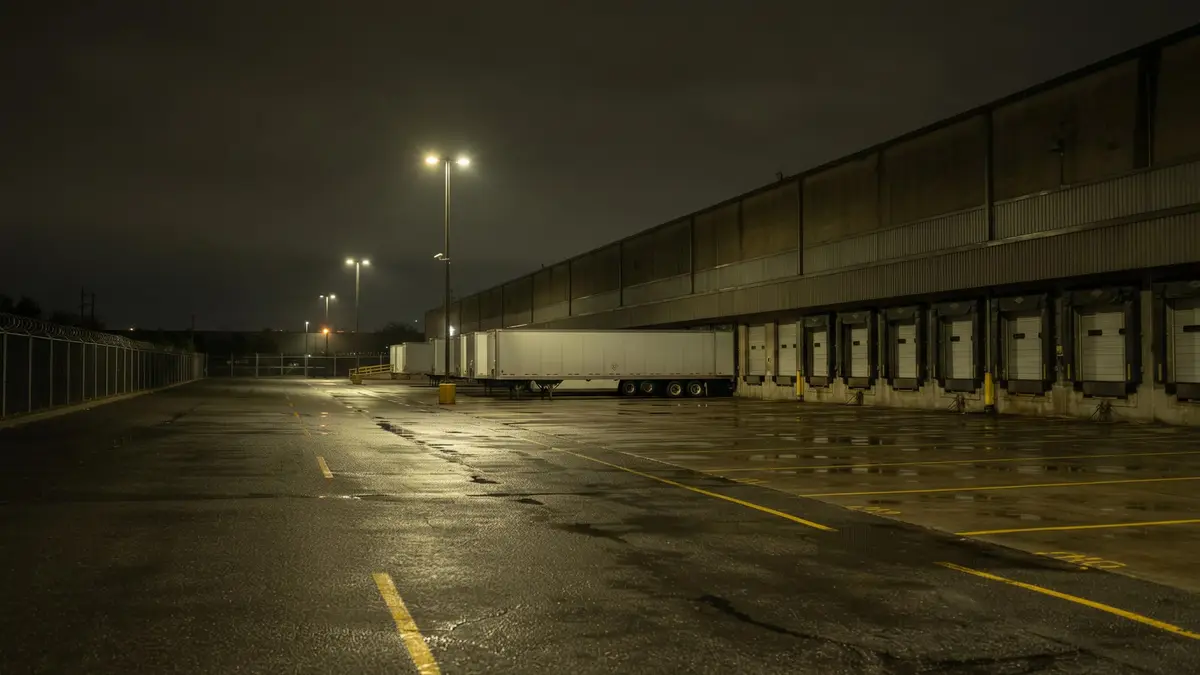
California’s violent incident log requirements ask nine things about every workplace violence incident, and the answers have to be kept for five years. Five of the nine ask what happened, and unless something recorded the moment, those answers come from the memories of the people who were there.
A violent incident log is the record California Labor Code 6401.9, added by SB 553, requires an employer to keep of every workplace violence incident. Each entry covers nine items, from the date and location to the consequences, leaves out anything that identifies the people involved, and is kept for at least five years.
Current as of November 20, 2026. The log has been required since July 1, 2024. The statute gives the Standards Board until December 31, 2026 to adopt workplace violence prevention standards. Cal/OSHA’s latest discussion draft is from September 2026, and the Board has published no proposed rule. Nothing here is legal advice.
Violent incident log requirements: nine fields and where each answer comes from
The statute bases each entry on three things: what the employees who experienced the violence say, witness statements, and what the investigation finds. It doesn’t mention video. The last column shows what a recording could let the investigation check, and where it runs out.
| Field in 6401.9(d) | What it asks | Where the answer usually comes from | What a fixed camera can show |
|---|---|---|---|
| (A) Date, time, location | When and where | The employee’s account | The time to the second, if a camera covers the spot |
| (B) Violence type | Which of Types 1–4 | The investigation | Nothing. Type turns on who the person is to the site |
| (C) Detailed description | What happened, in order | The employee, witnesses | The sequence and movements in view, but no words |
| (D) Who committed it | Customer, stranger, coworker and so on | The employee, witnesses, records | Rarely. A stranger and a former employee can look alike |
| (E) Circumstances | Lighting, alone, low staffing, rushed | The employee, the schedule | The light, and who else was in view |
| (F) Where it occurred | Workplace, parking lot, other area | The employee, the site map | Which area, if one is covered |
| (G) Type of incident | Attack, weapon, threat, sexual assault, animal | The employee, witnesses | Contact and objects in hand, not threats spoken |
| (H) Consequences | Who was called, what changed | The response record | Guards or police arriving, if in view |
| (I) Person completing it | Name, job title, date | The person keeping the log | Nothing |
Fields (B), (D) and (I) are decided at a desk, and (H) comes from the response record. The other five describe the moment itself, so they come from whoever was there.
The checks below follow one hypothetical incident at a California distribution center. At 11:39 p.m., a man with no business on the site walks through the open truck gate into the trailer yard. At 11:42 he shoves a yard driver against a trailer and raises a tire iron, then leaves when a second truck pulls in. The driver reports it at 6:10 a.m., his supervisor writes the log entry three days later, and the yard cameras’ recorder overwrites after 30 days.
Before the first entry: what the log has to catch
- Check that your site is covered. Most California employers are. Exemptions include health care facilities under their own standard, telework from a place the employer doesn’t control, and workplaces closed to the public with fewer than 10 employees there at any given time. A distribution center with 40 people a shift doesn’t qualify for the last.
- Check that threats get an entry too. The Cal/OSHA fact sheet for general industry employers says to log every incident, even one with no injury, and the definition reaches any threat or use of a weapon, common objects used as weapons included.
Date, time and location: fields (A) and (F)
What to check. Field (A) asks for the date, time and location. Field (F) classifies where it happened: in the workplace, in a parking lot or other area outside the workplace, or another area.
Why it matters. Every record the investigation checks, from the gate log to a recording, is found by the time. An hour’s error sends the investigator to the wrong hour of a recording already counting down to its overwrite.
What the entry looks like. From memory: around midnight, out in the yard. Checked against the gate log and, where one covers the row, the yard recording: November 3, 11:42 p.m., trailer yard, east row. For (F), decide once, in writing, whether your yard and lot count as the workplace or as an area outside it, and classify every entry the same way.
What happened: description, incident type and circumstances
What to check. Field (C) wants a detailed description. Field (G) classifies the incident: a physical attack without a weapon, an attack with a weapon or object, a threat of force or of a weapon, a sexual assault or threat, an animal attack, or other. Field (E) records the circumstances, including whether the employee was doing their usual job, working in a poorly lit area, rushed, short-staffed, isolated or alone, or unable to get help.
Why it matters. These three fields are the incident. Three days later, from one person’s recollection, five minutes shrink to a sentence, and the details that would change the prevention plan, such as how the man got in, go first. The plan’s periodic reviews read the log, so a thin entry makes a thin review.
What the entry looks like. If the investigation checked the yard recording, the sequence reads, without names: entry through the open truck gate at 11:39 p.m., contact between two trailers at 11:42, departure through the same gate at 11:44. Anything he said comes from the driver. For (G), two boxes: a physical attack without a weapon (the shove) and a threat with an object (the tire iron). For (E): usual duties, alone, and a poorly lit row with one yard light out. The dark row also changes what video analytics sees at night.
Who did it, and which of the four types
What to check. Field (B) asks for the type. Type 1 is someone with no legitimate business at the worksite, including anyone who comes in or approaches workers intending to commit a crime. Type 2 is customers, clients, patients, students, inmates or visitors. Type 3 is a present or former employee, supervisor or manager. Type 4 is someone who doesn’t work there but has or had a personal relationship with an employee. Field (D) classifies the perpetrator, from a customer or a stranger with criminal intent to a coworker or a partner.
Why it matters. The type decides which part of the plan has to answer. A Type 1 entry is about the gate. A Type 3 entry is about people the site employs.
What the entry looks like. Type 1, stranger with criminal intent, if the investigation finds nothing tying him to the site. Here a camera helps least: a former employee and a stranger can look the same on a yard camera at night, and telling them apart is the investigation’s job. In a yard where loaded trailers wait overnight, the cargo theft statistics for 2026 show what draws strangers in.
Consequences and the person completing the log
What to check. Field (H) records whether security or law enforcement was contacted and how they responded, and what was done to protect employees from a continuing threat. Field (I) names the person completing the log, with their job title and the date.
Why it matters. Field (H) doesn’t ask when anyone was contacted. Note the time anyway: set beside (A), it puts the response gap on the record for five years.
What the entry looks like. Security first learned of it at 6:10 a.m., 6 hours 28 minutes after the incident. Police report filed at 7:05 a.m. Truck gate now closed and locked after 10 p.m., the east-row light replaced, and night rounds paired. For (I): the night yard supervisor’s name, title and the completion date, November 6.
Five years for the log, and the recorder’s overwrite cycle
- The overwrite cycle. In the example, the log is kept for five years, and the recording that could check it is gone in 30 days. If nobody pulls the clip in that window, the entry stands alone for the next 59 months. The plan already needs post-incident response and investigation procedures, so write the footage step into them: whether a camera covered the spot, who pulls the clip, and by when. Ask counsel whether a preserved clip belongs with the investigation records.
- Identifiers. Leave out anything that would identify a person involved, such as a name, phone number or Social Security number. A description checked against a recording needs the same discipline: “a man in a dark jacket,” not who the investigator thinks it was.
What a yard camera can check, and the fields it can’t touch
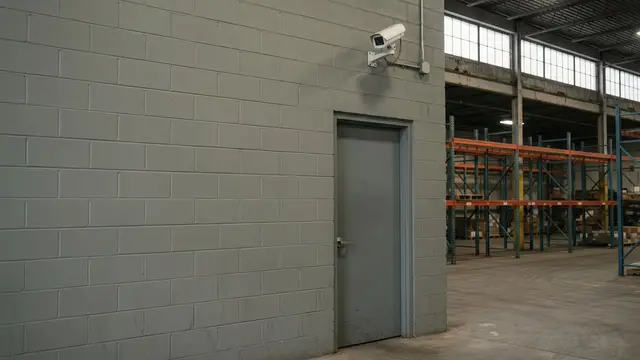
A camera can only check incidents it sees. California Labor Code 435 bars recording in restrooms, locker rooms and rooms set aside for changing clothes, so an incident in one of them is logged from accounts alone (see California’s limits on where a workplace camera can go).
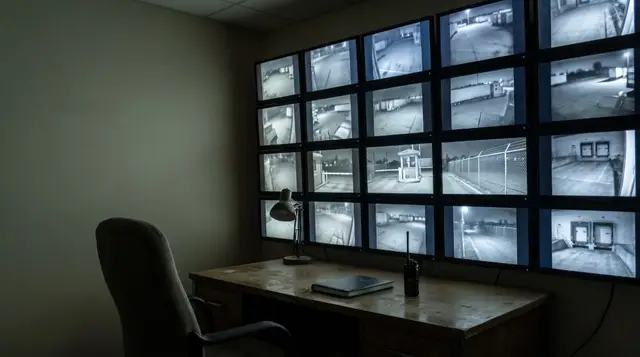
Where a camera does cover the spot, the bigger change is when someone finds out. Nsightify Perimeter Security detects intrusion into a restricted zone, after-hours zone entry and loitering, ready to run on existing cameras that hand a live stream to other software. Its real-time alerts reach on-site staff through the channels the team already uses. In the example, a restricted-zone rule on the truck gate, where nobody should be on foot at night, alerts the guard at 11:39 p.m., three minutes before the shove. For a worker hurt and alone, person down detection is ready to run on the same cameras.
None of it classifies a perpetrator, chooses a type or writes the log. A person completes the entry, from the accounts and findings the statute names.
Frequently asked questions
What has to be in a violent incident log?
California Labor Code 6401.9 lists nine items for each incident: the date, time and location; the workplace violence type; a detailed description; who committed it; the circumstances; where it happened; the type of incident; its consequences; and the name, job title and completion date of the person filling in the log. Entries leave out anything that would identify the people involved.
How long do you have to keep a violent incident log?
At least five years, under Labor Code 6401.9(f). Investigation records and hazard identification, evaluation and correction records are also kept for five years, and training records for one. Cal/OSHA can examine and copy them all, and employees and their representatives can examine and copy the log, free of charge, within 15 calendar days of asking.
Do I have to log an incident if nobody was hurt?
Cal/OSHA’s fact sheet for employers says to log every incident, even one that caused no injury. The statute’s definition covers a threat or use of physical force with a high likelihood of injury, psychological trauma or stress, whether or not the employee is injured, and any threat or use of a firearm or other dangerous weapon. Whether a particular event qualifies is a question for your counsel.
Take last quarter’s log and mark every field of every entry: checked against a record, recalled, or blank. The recalled times and blanks show where your record runs on memory, and where the footage step belongs in your investigation procedure. Cal/OSHA’s advisory committee page for the general industry standard shows what may change next. Where an entry turns on what a camera at your gate or yard would have shown, ask us what that camera would have caught.
More on this from Nsightify: PPE detection and hazard-zone monitoring.


See Nsightify in Action
We're onboarding a limited number of pilot partners. If you're an operations or security leader in construction, warehousing, or manufacturing — let's talk.